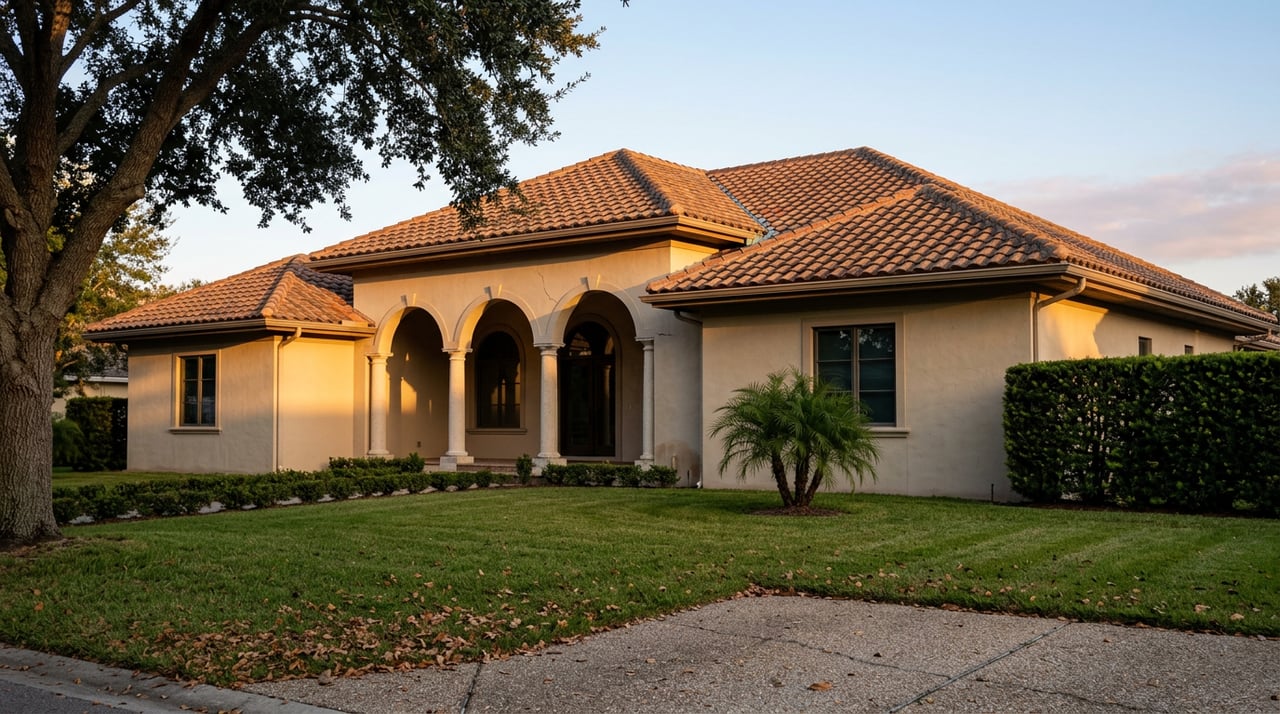
A Saturnia seller accepts an offer this month, and the transaction moves the way these things usually do until it doesn't. Ten days in, the buyer's insurance agent calls asking for a four-point inspection and a roof certification showing at least five years of remaining life. Nobody ordered either before listing. The house is fine. The roof is fine. But now the closing timeline stretches by two weeks while an inspector gets scheduled, a report gets written, and an underwriter reviews paperwork that could have existed since the day the sign went in the yard.
This is not a story about one unlucky house. It's a story about what happens when an entire neighborhood gets built in a five-year window and then all of it ages into Florida's insurance rules on roughly the same calendar.
One Community, One Birth Certificate
Saturnia is not a neighborhood that grew in phases over twenty or thirty years the way many Boca Raton communities did. GL Homes built all 414 single-family residences between 1998 and 2003, which means the community has one construction era, not several. Walk any street and the homes range from about 2,400 to nearly 5,000 square feet, but the roofs, the original electrical panels, and the plumbing were all installed within a few years of each other.
That matters more in 2026 than it did a decade ago, because Florida's insurance underwriting rules are built around age thresholds, not condition alone. A community with a wide range of build years has its insurance friction spread out, a few houses crossing a threshold every year. A community built in one window crosses that threshold all together. Saturnia's homes are now 23 to 28 years old. Every single one of them has already passed the age where insurers start asking questions.
The Number Insurance Actually Cares About
Citizens Property Insurance, Florida's insurer of last resort and a benchmark many private carriers follow, requires a four-point inspection on any residential application for a home more than 20 years old. The inspection covers exactly four systems: roof, electrical, plumbing, and HVAC. It documents age, material, and condition, and it flags anything that could cause a claim, from an aging water heater to an outdated panel brand.
A standalone four-point inspection typically runs $75 to $200, and bundling it with a wind mitigation inspection at the same visit usually costs less than ordering the two separately. That bundling detail sounds minor until you realize every Saturnia listing this fall will need both reports anyway. Ordering them together, before a buyer's lender asks, is the difference between a closing that stays on schedule and one that stalls over paperwork.
The Roof Question Depends on What's Actually Up There
Florida's Roof Age Law, in effect since July 2022, gives homeowners real protection: an insurer cannot refuse to issue or renew a policy solely because a roof is under 15 years old. Once a roof passes 15 years, the law requires that the homeowner be allowed to get an inspection by an authorized inspector before replacement can be demanded. If that inspection documents at least five years of remaining useful life, the insurer cannot deny coverage based on age alone.
Where it gets specific to Saturnia is what happens past that point, and the answer depends on the roof material, which varies by house even within one construction era.
| Roof type | Citizens threshold for mandatory documentation |
|---|---|
| Shingle (soft roof) | Older than 25 years |
| Tile, slate, metal (hard roof) | Older than 50 years |
A Saturnia home with an original shingle roof, now 23 to 28 years old, is either right at or already past that 25-year line. A home with an original tile roof has decades of runway before the same rule applies. The FL Pro Roofing group, which works across Boca Raton and Palm Beach County, notes that architectural shingles marketed as 30-year products typically last only 15 to 20 years in South Florida because of UV exposure, which means a shingle roof original to a 2001 Saturnia build is likely well past its practical life even before the insurance clock becomes the issue.
The homework here is not generic. It's specific to each house: know what's actually on your roof, know when it was installed, and get the documentation before a buyer's underwriter asks for it.
The Paperwork Buyers Are Already Trained to Ask For
Buyers shopping in Saturnia this fall are not going to be surprised by any of this. Their agents know the community's age. Their lenders' underwriting checklists already flag properties over 20 years old for a four-point inspection. What varies is which sellers show up to the negotiation with that paperwork already done.
A seller who orders the four-point and wind mitigation inspection before listing, and who has a roof certification ready if the roof is 15 years or older, walks into the first showing with a stack of answers instead of a stack of open questions. A seller who waits until under contract is negotiating from behind, because now the buyer's financing timeline depends on how fast an inspector can get scheduled, and every day of delay is a day the buyer has to reconsider.
Twenty Saturnia homes changed hands in the twelve months ending August 2026, with sale prices averaging in the neighborhood of $1.25 million. That's an active market, not a sleepy one, which means the sellers who remove friction before it appears are the ones whose listings move without a hiccup.
The Other Document With a Clock on It
The insurance paperwork isn't the only thing with a deadline attached. Every Saturnia sale also requires an HOA estoppel certificate, and Florida law is specific about how that works. Under Florida Statute 720.30851, the association must deliver the certificate within 10 days of a written request, the certificate must include 18 separate disclosures covering everything from the assessment paid-through date to any outstanding violations on record, and the maximum preparation fee the association can charge is $299. Associations are also required to keep records for at least seven years and make them available to homeowners within 10 business days of a request.
None of that is unique to Saturnia. What is worth noting is that a seller who requests the estoppel certificate the same week they order the four-point inspection has both pieces of paperwork ready before a buyer ever asks, which means neither document becomes the reason a closing date moves.
A Sequence, Not a Checklist
The order matters here more than the individual tasks. Before listing:
- Confirm the roof material and installation date. If it's original shingle, treat this as time-sensitive.
- Order a four-point inspection bundled with wind mitigation from a licensed Florida inspector.
- If the roof is 15 years or older, get a roof certification documenting remaining useful life from an authorized inspector.
- Address anything the four-point flags before it becomes a buyer's leverage point, particularly older electrical panels or plumbing materials insurers commonly reject.
- Request the HOA estoppel certificate in writing so the 10-day clock starts before an offer, not after.
None of this is expensive relative to a home in this price range, and none of it requires guessing. It requires doing the paperwork in the right order, before a buyer's underwriter makes the sequence for you.
FAQ
Does every Saturnia home need a new roof to sell? No. Age alone does not disqualify a roof under Florida law. What matters is documentation. A roof with a proper inspection showing five years of remaining life can keep a policy in place regardless of age, and tile roofs have a much longer runway than shingle under Citizens' own thresholds.
Is a four-point inspection the same as a full home inspection? No. A four-point inspection covers only roof, electrical, plumbing, and HVAC, specifically for insurance underwriting. A buyer will still likely order a separate, more comprehensive home inspection. The two serve different purposes and are often scheduled together to save a visit.
What happens if the HOA estoppel certificate isn't ready when an offer comes in? The association still has 10 days from a written request to deliver it, but waiting until under contract to request it adds that delay directly onto the closing timeline. Requesting it before listing removes that variable entirely.
If you own a home in Saturnia and you're thinking about listing this fall, the paperwork above is the difference between a transaction that moves on schedule and one that stalls over documents that could have been ready from day one. I'd rather walk through your specific roof, panel, and HOA situation before you list than after a buyer's underwriter finds the gaps for you. Raihan Mustafa is here when you're ready. Let's Connect.
